

Personalized books that teach: why we go deeper than a bedtime story
We love a bedtime story as much as anyone. But a child who is hanging on every word of a story about themselves is ready for so much more than their name on the page.
Published
Most personalized books stop at short and sweet
If you have bought a personalized book before, you probably know the shape. Your child’s name goes in, a character a little like them goes on the cover, and a gentle story carries them off to sleep. It is a lovely moment, and we would never talk anyone out of it.
But think about what is happening while you read. Your child is completely, utterly still. They are listening to every word, because every word is about them. Teachers spend whole careers trying to earn that kind of attention. It seems a shame to spend it only on seeing their name in print.
So when we started BespokeTales, we asked a different question. What if the story your child cannot wait to hear was also quietly teaching them the thing their class is working on this week?
What depth looks like in a children’s story
Depth does not mean longer words or a lecture halfway through chapter two. Children can smell a lesson in disguise from across the room. Depth means the idea is the problem the hero has to solve, so understanding it is the only way the story moves forward.
It also means different ideas need different kinds of story. A machine makes sense when you take it apart, so our hero might rebuild a broken windmill piece by piece. Rounding makes sense when you work it out loud on a problem that genuinely matters to the plot. Kindness makes sense when you have to choose it, on the day a friend is left out. Before we write a learning book, we work out which kind of idea we are teaching, and that decides the kind of story it becomes. See how each kind of idea is taught its own way.
And one idea, told over several chapters, should never be the same scene with the names changed. Each chapter comes at it from a new direction: a worked example, then the idea hiding in everyday life, then spotting an answer that cannot be right. That is how an idea gets turned over in a child’s head instead of simply repeated. A new angle every chapter.
Built around what your child is learning now
A story that teaches something random is nice. A story that teaches exactly what came home in the school folder on Tuesday is useful. Every child profile carries a grade and a place, and from those we load the standards their own school system publishes for that year, subject by subject. You can build a book on any one of them. How a book follows their school curriculum.
Homeschooling, working with a tutor, or following a plan of your own? Upload it, or write what you want taught in your own words, and the story is built on that instead. Bring your own curriculum.
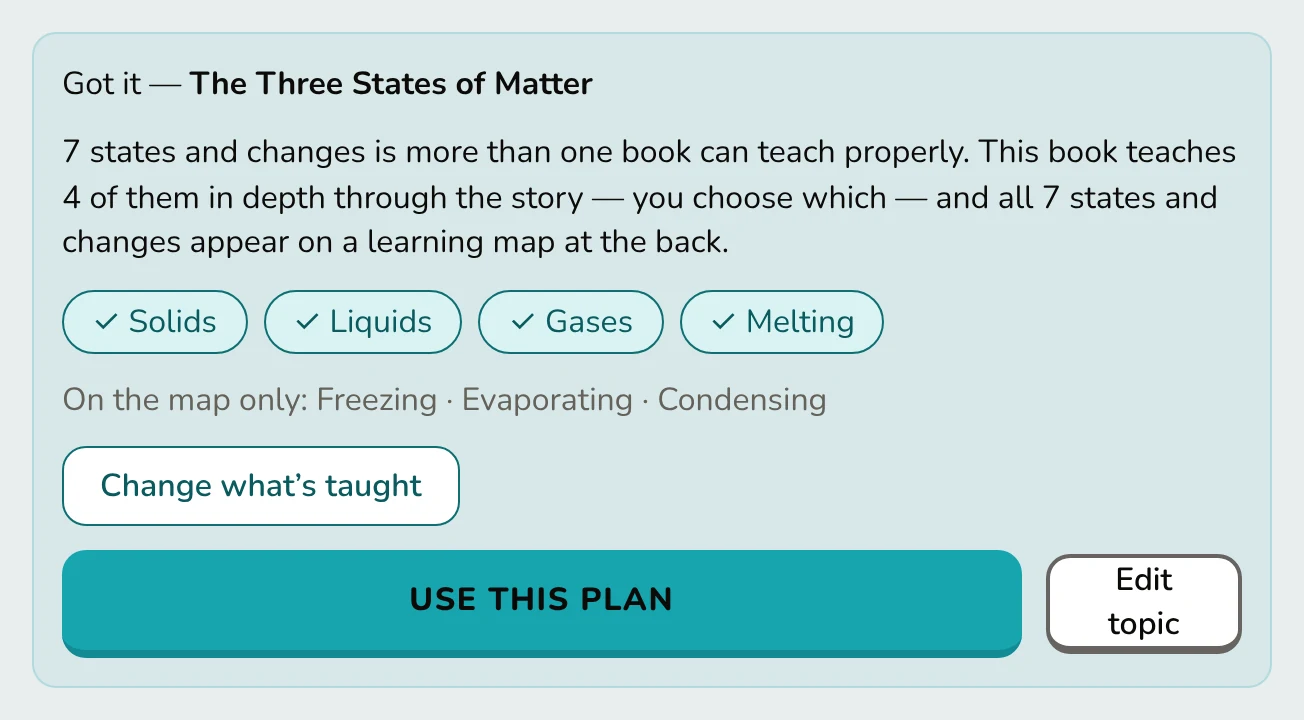
Whatever you choose goes into the story. If you ask one book to carry more than it can teach properly, we tell you so, show you the few ideas it will teach in depth, and let you swap them for the ones you care about most. The rest still appear on a little learning map at the back. We would rather be honest about it than give ten topics a passing mention each, because a mention is not the same as understanding.
Getting the facts right, every time we can
There is no point teaching something if it is wrong. Before a learning book is finished, we read the whole draft once more against the topics it was built on, looking for a wrong number, a sum that does not add up, a wrong unit, or a claim that contradicts the science. Anything we find is corrected before your child sees it. How the facts are checked.
We will be honest with you: that is one careful reading, not a promise of perfection. If you know a subject well, read the first book on it yourself, and tell us if anything slipped through. We would genuinely rather hear about it.
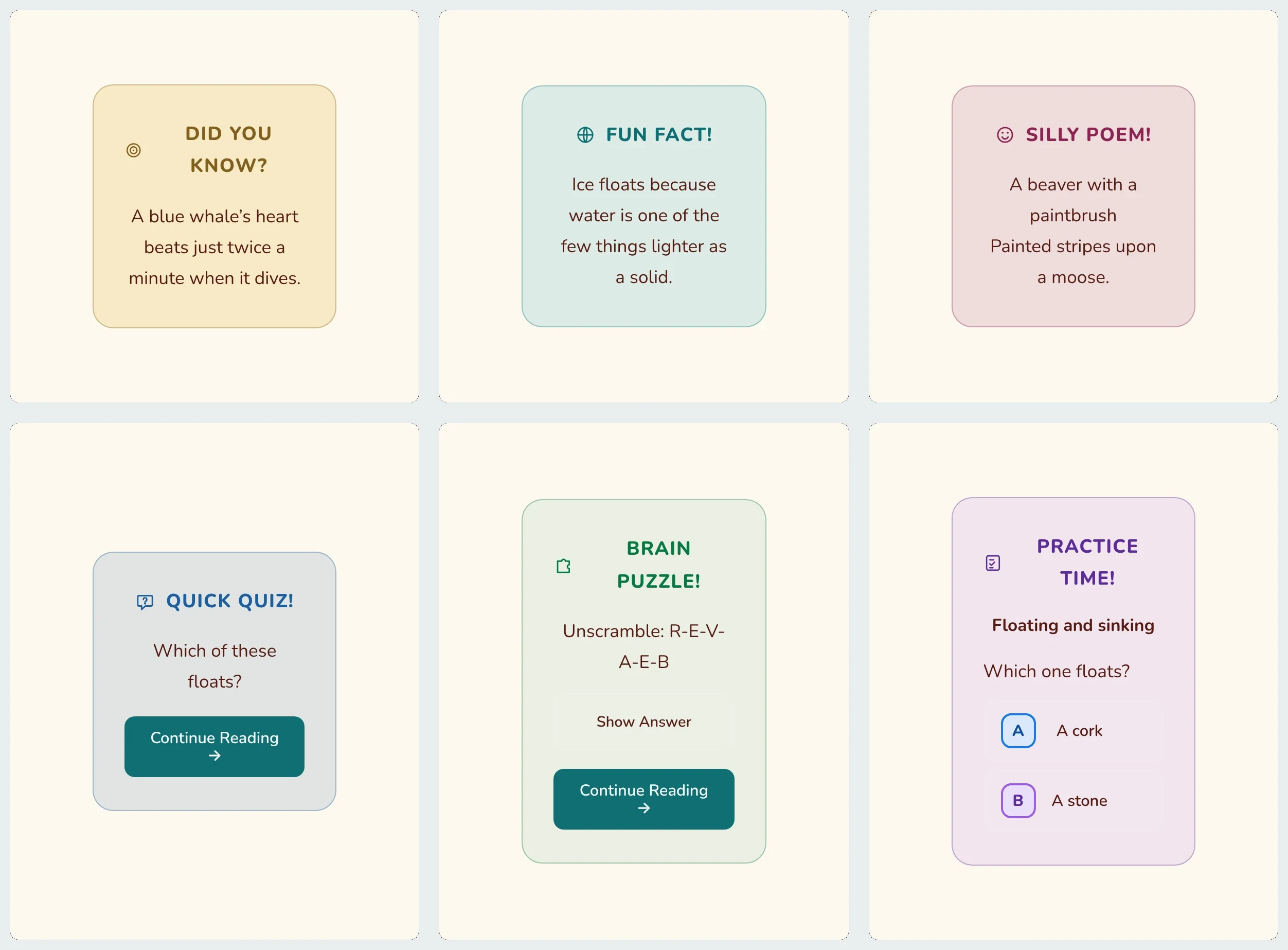
Along the way, a book can pause for a real fact about where the story is set, a riddle built from its own words, a silly poem or a quick quiz, so the learning keeps poking its head up between the adventures. Facts, riddles and quizzes between the pages.
What happens after the last page
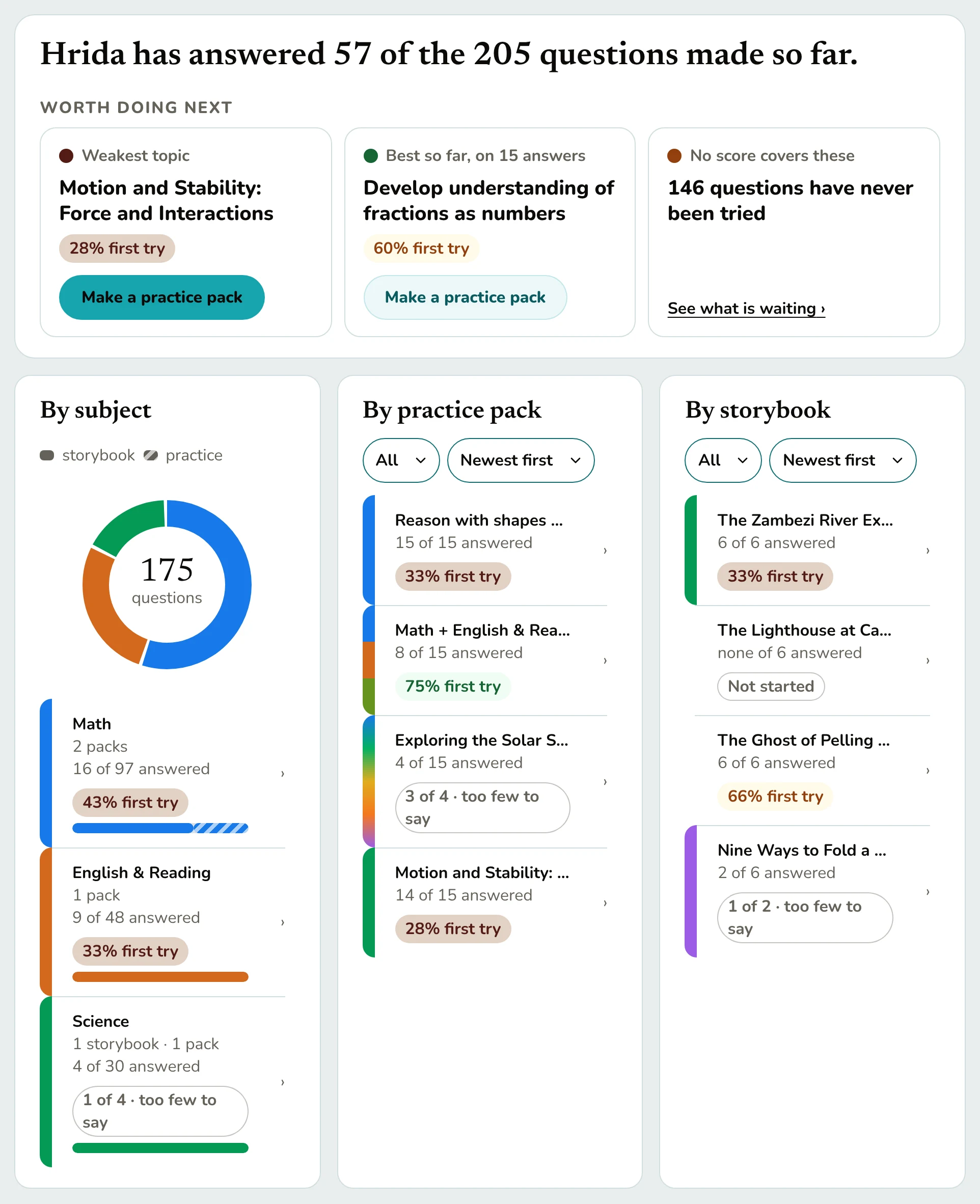
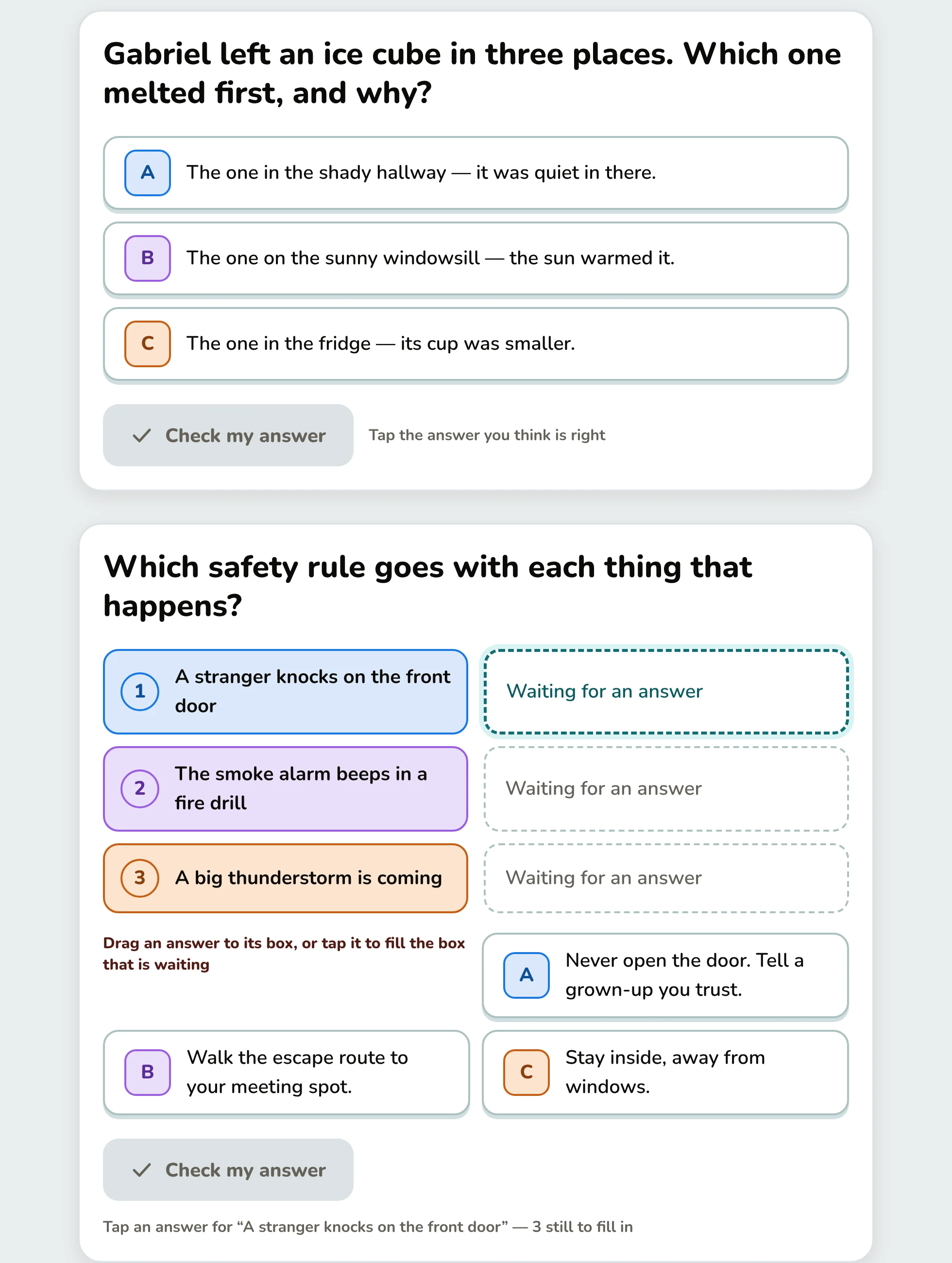
A bedtime story ends when the book closes. A learning story is just getting started. If you like, a book can end with a few questions built on the very idea it taught, dressed up with the story’s own characters. We keep your child’s first answer, so the score tells you what they really knew, not just what they worked out after three tries. Questions that tell you something.
Practice packs: one idea, asked lots of ways
And when a topic has not quite landed yet, that is not a failure. It is information. From the results you can start a practice pack on the very same topic, which asks about the same idea in lots of different ways, starting easy and building up. Being asked one thing several ways is how a child goes from recognising an answer to really understanding it. Practice packs on any subject and turning a result into the next thing.
And yes, we still do bedtime
None of this means every book has to be a lesson. Some nights the only goal is a cosy adventure, a giggle and sleep, and a short, gentle story with your child and the people they love is exactly right. You choose, every time you make a book.
We simply think a child deserves the choice. The same story that makes them feel like the hero can also leave them a little bit cleverer than they were at the start, and they will never notice the lesson, only the adventure. If you would like to read more about why stories teach so well, here is our post on learning stories.
See the depth for yourself, before you pay a thing
We know it is easy to say a story has depth. So we would rather show you. Open the demo and you can walk through a real family’s library: the books, the pictures, the questions at the end, all exactly as you would get them. Look around the demo library, see everything a book can teach, or when you are ready, make your child’s first book.